The Third Act Theorist
CatharticYou love intensity with a payoff, and you'll argue about how the great ones land their endings.
- Styledrawn to how it's made
- Mainstreamloves the widely loved films
Introduction
Third Act Theorists tend to watch with the ending already on their minds. They aren't trying to skip ahead. They know the great films are building toward something, and they want to see how the pieces get set.
They love intensity that earns its keep. They want a slow unraveling, a descent that gets stranger and darker, a tragedy that climbs high so the fall can hurt. Vertigo is close to sacred for them, a film that tightens its spiral until the closing moments snap everything into place.
A hard watch does not scare them off if the payoff is real.
They gravitate to the films everyone has heard of, and they are not shy about it. The canon is a shared language, and they want to be fluent. Part of the fun is that a famous movie comes with famous arguments, and Third Act Theorists always have opinions ready about which endings land and which fumble.
They notice structure the way some people notice music. They track where the turn comes, how a long take traps them inside a moment, why a closing image echoes the opening. A hard watch does not scare them off if the payoff is real.
What they want most is that click, the feeling of a heavy story landing exactly where it had to. It leaves them stunned, satisfied and already planning the rewatch.
How They Watch
- They track where the turns land and quietly predict the ending.
- They sit through a punishing middle stretch if they sense a payoff coming.
- They notice when a closing image echoes an opening one.
- They head straight for the arguments about the ending once the credits roll.
What Wins Them Over / What Loses Them
Wins them over
- An ending that reframes everything before it
- A slow descent that tightens with every scene
- A classic with a reputation worth testing
Loses them
- A fluffy story with no real stakes
- An ending that fizzles or cheats
- Feel-good crowd-pleasers built on easy beats
Blind Spots
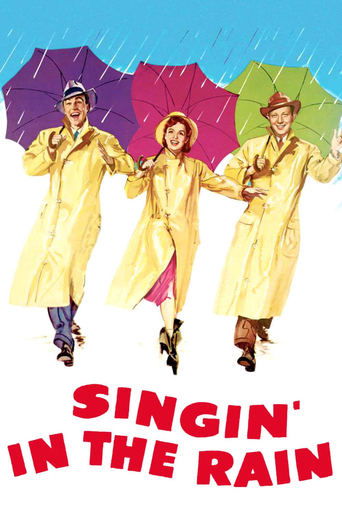 Singin' in the Rain (1952)
Singin' in the Rain runs almost entirely on joy, a film built to make people grin rather than brood, which is far from where Third Act Theorists usually live. Watch how carefully its showstoppers escalate, though, and it turns out pure delight can have a payoff worth arguing about too.
Movie Night With Friends
Third Act Theorists are glad to pick a classic, but they will ask everyone to stay quiet through the final stretch. For them, the real movie night starts when the credits roll and they ask what everyone thought of the ending. They are the friend with a theory, a counter theory and a scene they want to rewind just to prove a point.
Their Opposite
The Dreamer
Story · Niche
Dreamers drift with a film and barely care where it lands, while Third Act Theorists are watching for the destination from the opening frame. Argue over an ending and the Dreamer says the mood was the point, while the Theorist says the mood was there to serve the landing. Theorists could learn to enjoy a film that simply floats, and Dreamers might discover how much a strong ending can deepen a feeling.
The Defining Films
 The House That Jack Built2018difficult viewing · slow unraveling · hyper edited
 Melancholia2011operatic emotion · heavy emotional · hypnotic immersion
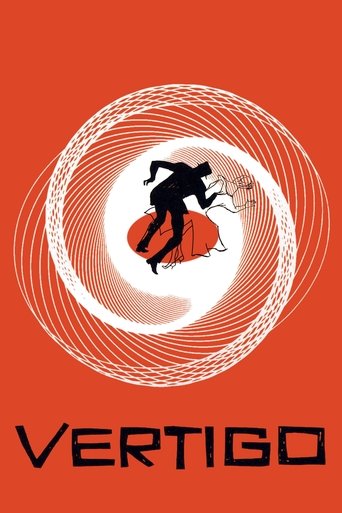 Vertigo1958investigation spiral · wistful longing · long-take immersion
 TÁR2022slow unraveling · operatic emotion · conversation starter
 Perfume: The Story of a Murderer2006lush maximalism · slow unraveling · theatrical style
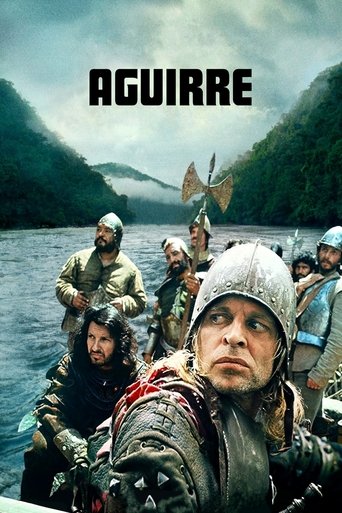 Aguirre, the Wrath of God1972slow unraveling · fever dream · long-take immersion
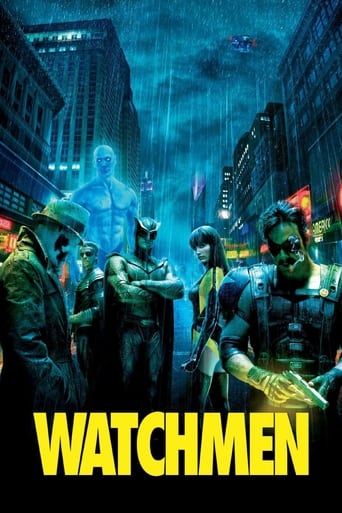 Watchmen2009grainy 70s grit · investigation spiral · end-of-an-era
 The Substance2024operatic emotion · hyper edited · theatrical style
Perfery reads your film history and places you among the editions.